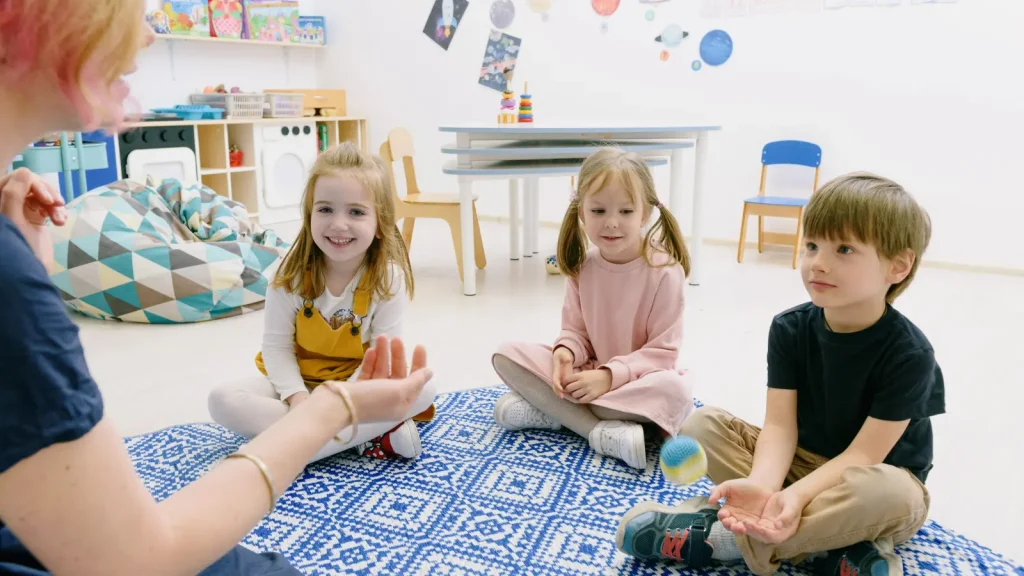
If you’re a Paramus parent trying to figure out how to choose between daycare and preschool, you’re at one of the most common forks in the early-childhood road. Your child has outgrown the in-home or grandparent setup and you’re asking the same question every Bergen County parent asks at this stage: what’s actually the difference, and which one does my kid need? The honest answer is that in many quality programs the line between daycare and preschool blurs — but the practical differences in hours, cost, and curriculum can shape your family’s life for the next two or three years. This guide walks through what each program type really is, how they compare on the things that matter, and the five questions that usually settle it.
Daycare vs. preschool: what’s the real difference?
Lots of parents assume daycare and preschool are totally separate things. In reality, they overlap. The cleanest distinction is that daycare focuses on care and supervision across long hours, while preschool focuses on a structured early learning curriculum across shorter hours. But quality daycares teach, and many preschools also provide care. The label matters less than what’s actually happening inside the room.
What ‘daycare’ typically means
Daycare programs usually run full-day, year-round, and accept children from infancy onward. They include rest time, meals, and outdoor play, and many include enrichment activities like music, art, and language exposure. Daycare is built around the working-parent schedule. At JJ Paramus Day Care, our daycare opens at 7:00 a.m. so working parents can drop off and head to work without rushing.
What ‘preschool’ typically means
Preschool generally serves children ages two and a half to five and follows a school-year calendar. Hours are shorter — often 9:00 a.m. to noon, or 9:00 a.m. to 3:00 p.m. — and the focus is on pre-academic skills like letters, numbers, social-emotional learning, and following classroom routines. A traditional preschool may close for school holidays, summer, and snow days, which can be tough for working parents.
Why the line blurs in quality programs
Programs accredited by the National Association for the Education of Young Children — which sets the gold-standard quality benchmarks for early childhood programs — emphasize developmentally appropriate practice across the whole day. That means a quality daycare looks a lot like preschool from 9 to noon, then transitions into rest and play in the afternoon. At JJ, our preschool-age rooms run a full early-learning curriculum inside a daycare schedule. Parents get the hours of daycare with the learning of preschool.
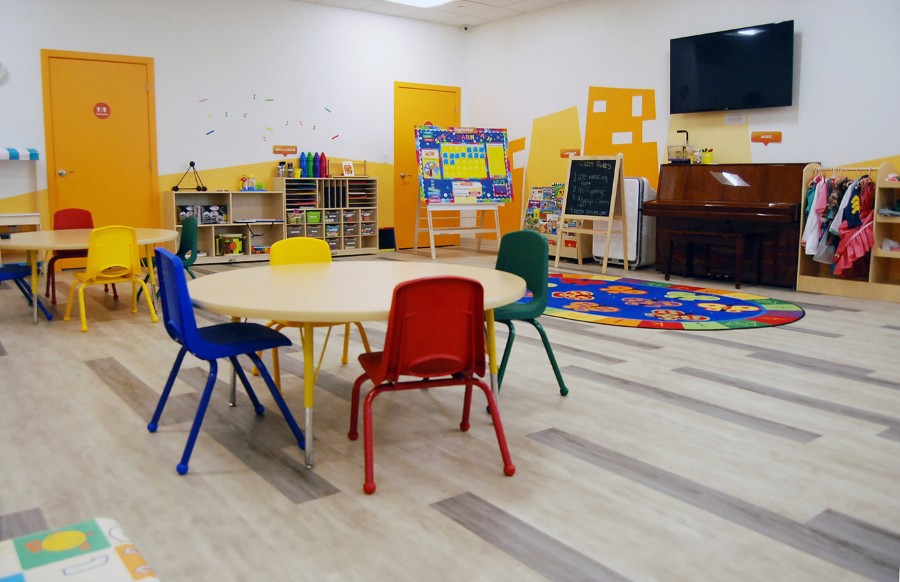
Cost: how daycare and preschool pricing compare in Paramus
Daycare typically costs more than half-day preschool because you’re paying for more hours and more services (meals, naps, year-round coverage). According to Child Care Aware of America’s 2024 Price & Supply Report, the average annual price of center-based child care in New Jersey was $20,213 for an infant and $19,448 for a toddler. Bergen County rates often sit at or above the state average. Half-day preschool runs significantly less because you’re buying fewer hours.
We keep our pricing transparent on our tuition page. The right question isn’t always “which is cheaper” — it’s “which one actually works for our family without us having to fill the gap with after-care or a nanny.”
Hours and schedules: which one fits your family?
Full-day vs. half-day
Full-day daycare typically runs 7:00 a.m. to 6:00 p.m. or so. Half-day preschool typically runs three to four hours in the morning. If both parents work outside the home full-time, half-day preschool means scrambling for after-care every afternoon — which usually costs as much as just enrolling in full-day daycare in the first place.
Year-round vs. school-year
Daycare is open year-round; preschool follows a school calendar with summer off, plus closures for federal holidays, teacher in-service days, and sometimes spring break. Working families often piece together summer camps and grandparent help to bridge those gaps. Year-round daycare avoids that scramble entirely.
Curriculum: what will my child actually learn?
Daycare curriculum
Quality daycares use a real curriculum framework — Creative Curriculum is one of the most widely used in NJ — and group children by age. Infants and toddlers focus on language exposure, motor skills, and routine. Preschool-age daycare rooms add letter and number recognition, early writing, and social-emotional learning.
Preschool curriculum
Half-day preschools concentrate the same kinds of skills into shorter days. Some lean Montessori, some lean play-based, some lean academic. Ask each program what framework they use and how they handle kids at different developmental stages.
What to look for either way
A real curriculum, posted weekly. Teachers who can tell you what your child worked on that day. Mixed enrichment — art, music, movement, language — not just worksheet practice. JJ’s program runs Creative Curriculum, Music Enrichment, Messy Art Education, and Language Immersion in English, Spanish, and Korean.
Best age for each program
Daycare can start anywhere from six weeks old. Preschool typically starts at two and a half or three. If you need care for a baby or young toddler, daycare is the only fit. If your child is three or four and one parent is home for most of the day, half-day preschool can work. Many Bergen County families who started in daycare stay through Pre-K because the transition to kindergarten is smoother when the curriculum has been consistent.
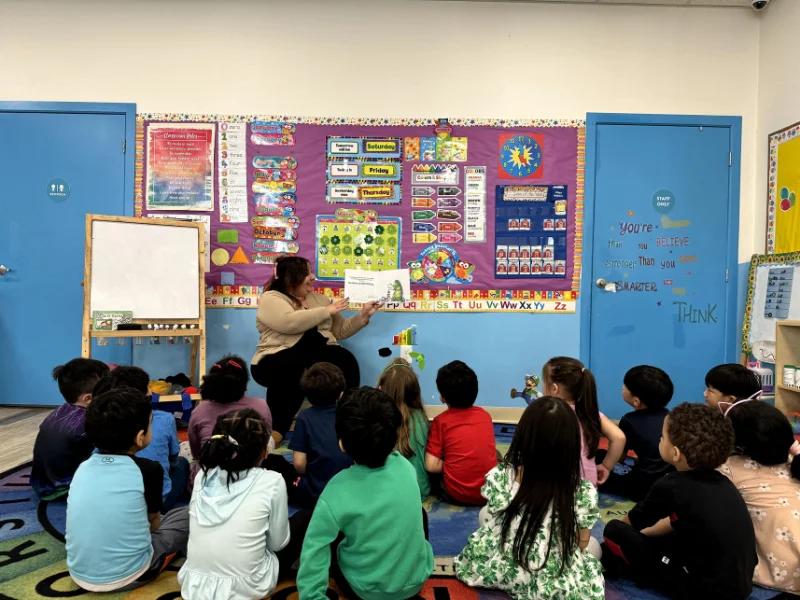
How to decide: 5 questions to ask yourself
- How many hours of coverage do we actually need each day, year-round?
- Do we both work outside the home, or is one parent flexible in the afternoons?
- Does our child need infant or toddler-age care, or are they three-plus?
- Will we need summer coverage, or do we have other plans for June through August?
- Do we want one consistent program from infancy through Pre-K, or multiple transitions?
Frequently asked questions
Not exactly. Preschool is a broader term covering programs for ages 2.5–5. Pre-K specifically refers to the year right before kindergarten, usually for 4-year-olds. JJ’s Pre-K program prepares Paramus children for kindergarten readiness.
Some preschools accept children at 2.5 if they’re potty trained and can handle short separations from caregivers. JJ welcomes 2-year-olds into our toddler program, no potty training required.
Yes, full-day daycare usually costs more than half-day preschool because you’re paying for more hours, meals, and year-round coverage. But once you add after-care to a half-day preschool, the gap narrows fast. Compare the all-in cost, not the headline rate.
Half-day preschools usually don’t include lunch or naps because hours don’t go that long. Full-day programs almost always do. Ask each program for a sample daily schedule before enrolling.
Look for an accredited center that runs a real curriculum across full-day hours. JJ Paramus Day Care does exactly that — Creative Curriculum and enrichment delivered inside a 7:00 a.m. to 6:00 p.m. day. Tour the building before you decide: (201) 500-2951.
Signs of readiness include separating from a caregiver without lasting distress, following simple two-step directions, basic communication, and showing interest in other kids. Readiness varies — visit a few programs and watch how your child responds during the tour.
How JJ combines both in Paramus
JJ Paramus Day Care covers ages 6 weeks through Pre-K, year-round, with a full early-learning curriculum built into our daily schedule. You get the practical reality of daycare — long hours, meals, year-round coverage — and the developmental focus of preschool, in one program. Schedule a tour or call (201) 500-2951 to come walk through and see for yourself.