
If you’re trying to figure out the best age to start daycare for your child, you’ve already done the hardest part — you’re thinking about it carefully. Many Paramus parents arrive at this question carrying maternity leave deadlines, parental guilt, family pressure, and a stack of conflicting opinions from friends, in-laws, and the internet. The honest answer is that there’s no single “best age” that works for every family. The right age is the one that fits your family’s needs, your child’s temperament, and your child’s developmental stage. We’ve watched 30+ years of Bergen County families navigate this decision at JJ Paramus Day Care, and this guide walks through what research actually says, what to expect at each age, the signs your child is ready, and how to think about timing in the local Paramus context.
Is there a “best” age to start daycare?
Short answer: no — and any program that tells you otherwise is selling something. The right starting age is a combination of three factors: when your family needs care, what your child’s temperament suggests, and what kind of program you’re considering. A 6-month-old in a high-quality infant room with low ratios may thrive earlier than a 2-year-old in an overcrowded program. The age matters far less than the quality of the care.
What research says about early childcare
Effects of high-quality care from infancy
Decades of research from groups like Zero to Three and the Harvard Center on the Developing Child show that high-quality early care supports language development, social skills, and school readiness. Children in quality programs from infancy generally do as well as or better than children cared for at home on developmental measures, when the program is genuinely high-quality. The key word is quality: well-trained staff, low ratios, age-appropriate curriculum, safe environment.
Why quality matters more than age
Studies that look at outcomes for children in childcare consistently show that program quality drives results — not whether care started at 3 months or 30 months. A child in a low-quality program at any age does worse than a child in a high-quality program at any age. When you’re choosing, focus on what’s happening inside the room, not the age on the calendar.
Starting daycare by age: what to expect
6 weeks to 12 months (infants)
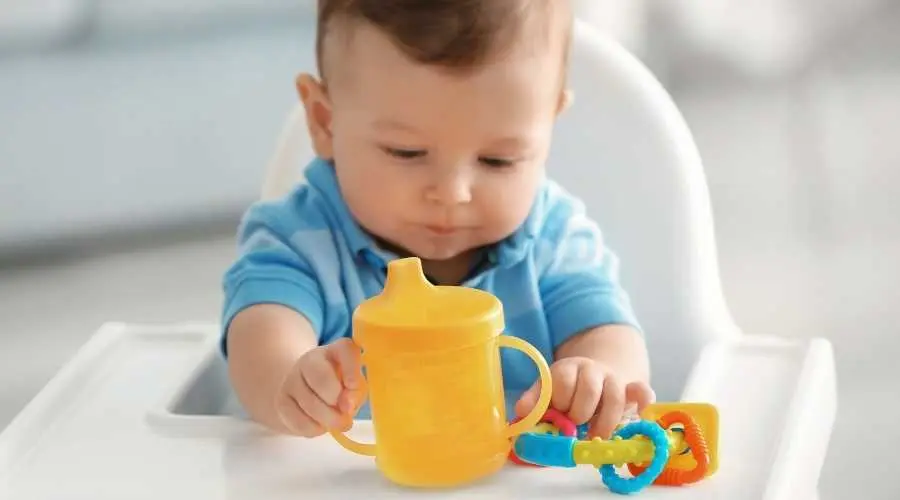
Many Paramus families start daycare at the end of maternity or paternity leave — often 6 to 12 weeks. JJ accepts infants from 6 weeks. At this age, babies adjust quickly because they don’t yet have strong opinions about routine. The key is finding a program with a dedicated infant room, low ratios, and staff trained in safe sleep and infant development. See our infant care program for what we do for the youngest age group.
12 to 24 months (toddlers)
This window can be the hardest age to start daycare because separation anxiety peaks here. Toddlers also need lots of one-on-one attention as they learn to walk, talk, and assert independence. If you start in this window, expect 2-4 weeks of bumpy mornings while your child adjusts. The benefit is exposure to peers right when language and social skills explode.
2 to 3 years
By 2-3, kids are ready for structured social settings, peer interaction, and a real curriculum. Many families who started with a nanny or home care transition to daycare here for the social development. Drop-off transitions usually settle within a couple of weeks at this age.
3+ years (preschool)
If you’re starting daycare or preschool at 3 or older, you’re entering the most academically structured stage. Pre-K and the year before kindergarten focus on letter and number recognition, early reading, fine motor skills, and group routines. Starting too late (after age 4 with no prior group experience) can mean a steep learning curve in kindergarten.
Signs your child is ready for daycare
We have a separate piece on 5 signs your child is ready for daycare that goes deeper, but the basics:
- Your child can separate from you for short periods without lasting distress.
- They show interest in other children — even from a distance.
- They follow simple two-step directions (“get your shoes and bring them here”).
- They communicate basic needs through words, signs, or pointing.
- They can handle short transitions (snack to play, play to nap) without melting down every time.
Note: infants don’t need to meet these criteria. They’re more relevant for toddlers and older children starting fresh.
What if we wait too long?
There’s no hard cutoff where waiting becomes harmful, but starting daycare at 4 with no prior group experience can be tougher than starting earlier. Older children have stronger preferences and routines, and the social leap to kindergarten is steeper without prior group experience. If you’re waiting until 3 or 4, look for a high-quality preschool program with peers who started earlier — your child will catch up quickly in a strong environment.
Local considerations for Paramus and Bergen County families
Maternity leave timing
Most NJ employers offer 6-12 weeks of paid leave under federal FMLA plus NJ Family Leave Insurance, with some employers offering more. Plan ahead — the best programs in Bergen County have waitlists 6-12 months out, so secure a spot before your leave ends.
Kindergarten timing
New Jersey kindergarten cutoffs are set by individual districts; in most Bergen County districts including Paramus, the cutoff is October 1. That means your child must turn 5 by October 1 to start kindergarten that fall. Plan your daycare-to-Pre-K trajectory backwards from that date.
Working parent realities in Bergen County
Most Paramus families are dual-income, and the practical reality is that one parent staying home indefinitely isn’t financially feasible for most. If you’re feeling guilty about starting daycare, you’re not alone. Read our piece on managing working parent guilt — the guilt is universal, and it usually fades once you see your child thriving in a quality program.
How JJ Paramus Day Care welcomes children at every age
Our programs by age cover infants from 6 weeks through Pre-K. Each age group has its own room, age-appropriate curriculum, and trained caregivers. Our staff is fully licensed, background-checked, and CPR and First Aid certified, with over 30 years caring for Paramus families. We help families make the right call about timing during a tour — including being honest if a child seems ready or not yet ready for a particular age group.
Frequently asked questions
Yes, JJ accepts infants starting at 6 weeks old. Many Paramus parents start at the end of maternity or parental leave. Tour the infant room before your start date: (201) 500-2951.
Not necessarily. The quality of the program matters more than the age. Babies adjust to high-quality care more easily than older infants because they don’t yet have strong routines or separation anxiety. Both ages can work in a strong program.
No. Decades of research show that high-quality early care supports development. Quality matters more than starting age — well-trained staff, low ratios, and age-appropriate curriculum drive outcomes.
Around 18 months to 2 years is when peer interaction starts to genuinely matter for development. Before then, parallel play with peers is fine but not essential. Older toddlers and preschoolers gain a lot from daily group settings.
Look for short separations without lasting distress, interest in other children, ability to follow simple directions, and basic communication. For infants, these don’t apply — you’re focused on the program quality, not the child’s readiness.
Waiting until 3 is fine if it fits your family. Look for a strong preschool program when you start so your child can catch up on group routines and peer skills before kindergarten. Plan to start by spring before kindergarten at the latest.

Tour our programs
The best way to figure out timing for your family is to walk through the program. We can show you each age group’s room, talk through what’s working for similar families, and answer questions specific to your child. Schedule a tour or call (201) 500-2951.