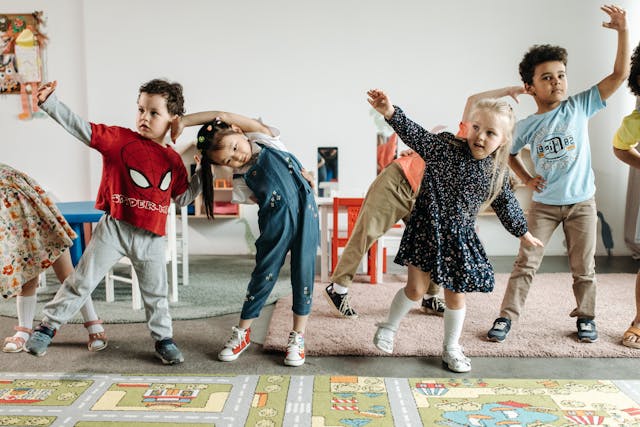
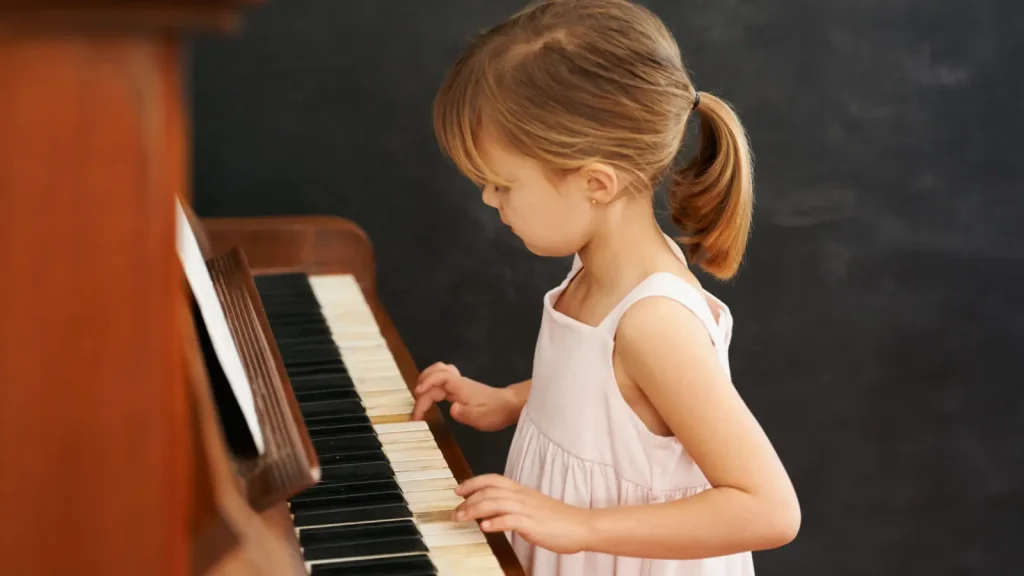
Watch a preschooler dance to a song they’ve never heard, paint with their whole hand, or stop mid-stride to bang two sticks together to hear the sound — and you’re watching the most efficient learning system on Earth. Music and arts programs help preschoolers develop in ways that show up in language, math, motor skills, emotional regulation, and creative thinking. Bergen County parents who care about early development often ask which preschool programs offer real music and arts versus a worksheet labeled “art project.” That’s the right question. We’ve run dedicated music and art programs at JJ Paramus Day Care for over 30 years, and this guide walks through what the research actually shows, what to look for in a quality program, and what we do at JJ.
Why music and arts belong in preschool
Music and arts aren’t extras layered on top of “real” learning — they are real learning, especially at this age. The National Association for the Education of Young Children, which sets quality benchmarks for early childhood education in the U.S., emphasizes music, movement, and creative arts as foundational components of developmentally appropriate practice. They’re not a break from learning; they’re how preschoolers learn most effectively.
Preschool brains are wired to learn through pattern, rhythm, repetition, and physical exploration. Music delivers all four. Visual art delivers fine motor practice, problem-solving, and self-expression in one activity. A program that takes these seriously is treating early childhood education the way the research says to treat it.
How music helps preschoolers develop
Language and literacy
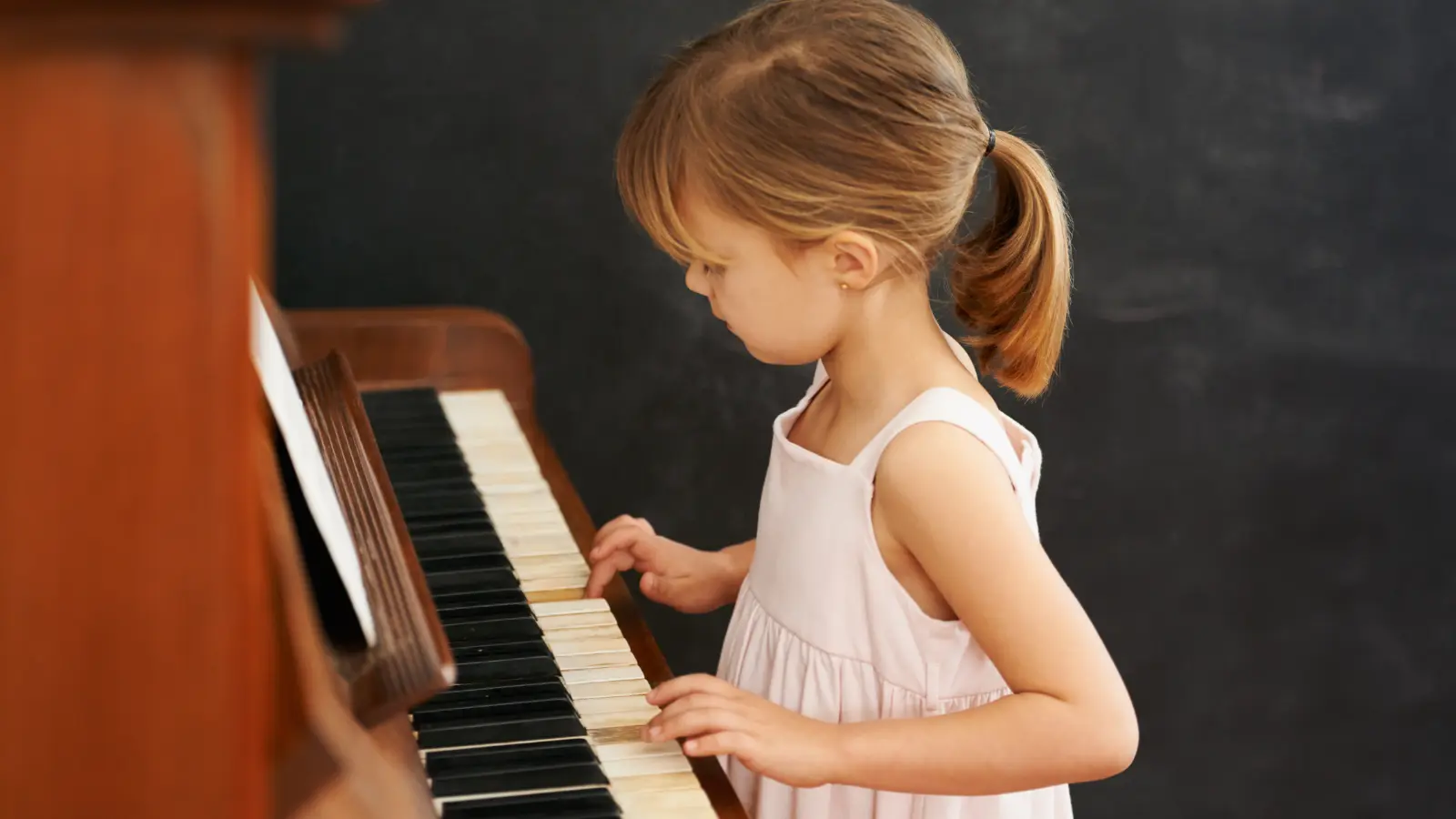
Songs are language, broken into chunks small enough for a 3-year-old to learn. Rhymes teach phonemic awareness — the ability to hear and play with the individual sounds in words, which is the foundation of learning to read. Kids who sing daily build vocabulary faster, develop better listening skills, and pick up early literacy markers earlier.
Math and pattern recognition
Music is math you can hear. Beats, measures, and rhythm patterns build the same neural skills used for early math: sequencing, counting, recognizing patterns, and predicting what comes next. Clapping a rhythm and counting blocks use the same underlying brain functions.
Memory
Songs are how humans remembered everything before writing existed. Preschoolers learn the alphabet, numbers, days of the week, and routines through song because melody locks information into memory in a way prose doesn’t. The ABC song works because melody is a memory tool.
Emotional regulation
Music helps preschoolers identify and regulate big feelings. A loud, fast song validates excitement; a slow, quiet song helps a worked-up child come back down. Kids who do daily music build a vocabulary for their feelings before they have the words for them.
How visual arts help preschoolers develop
Fine motor skills
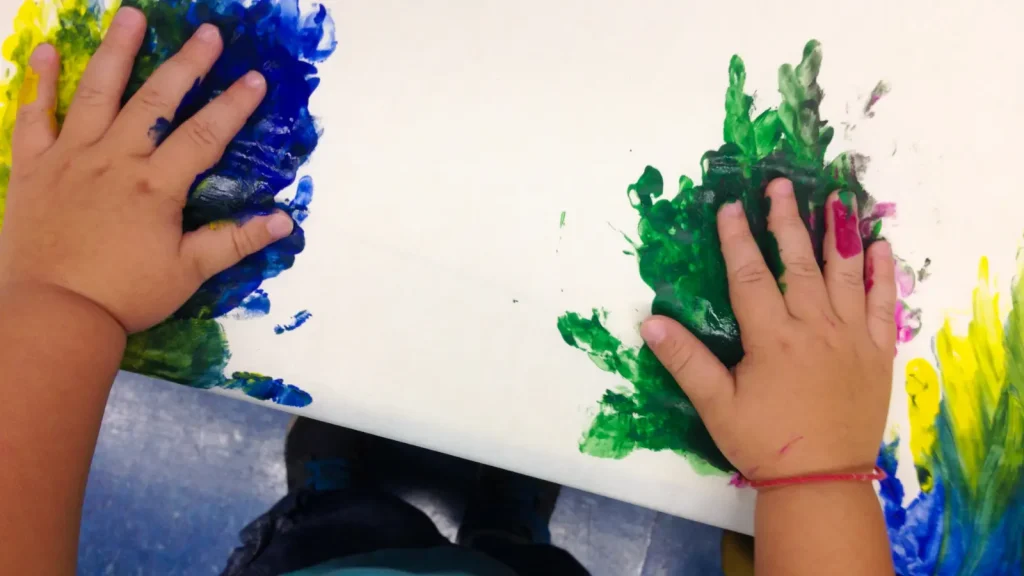
Holding a paintbrush, squeezing a glue bottle, cutting with scissors, manipulating clay — every art activity is a fine motor workout. Strong fine motor skills are what makes writing possible later. Kids who do regular art enter kindergarten with hand strength and pencil control that takes other kids months to develop.
Self-expression and emotional outlets
Preschoolers don’t always have the words for what they’re feeling. Art gives them another channel. The 4-year-old who scribbles hard with red crayon after a tough morning is processing emotion. The kid who makes the same family portrait every week is communicating something about their world. Adults who watch carefully learn a lot about kids through their art.
Problem-solving
How do I make this stick? What happens if I mix these colors? How do I get the paper to stay flat? Every art project is a tiny engineering problem. Kids who do open-ended art learn to experiment, fail, adjust, and try again — the foundation of all later learning.
What a quality music and arts program looks like
What to look for
- Daily exposure to music — not just a weekly music class. Singing, movement, instruments, and listening should be woven through the day.
- Open-ended art projects where the process matters more than the finished product. Kids choose their colors, materials, and approach.
- Real instruments, not just music apps. Shakers, drums, bells, xylophones — kids need to make sound with their hands.
- Variety in art materials — paint, paper, clay, fabric, found objects, recycled materials.
- Teachers who participate and model engagement, not just supervise.
What to avoid
- “Art” projects that are really worksheets — coloring inside lines, gluing pre-cut shapes onto a template.
- Identical finished products at the end of every art session. If every kid’s project looks the same, that’s craft, not art.
- Music that’s purely background — passive listening doesn’t build the same skills as active engagement.
- Programs that treat music and art as rewards or fillers rather than as core curriculum.
Music and arts at JJ Paramus Day Care
Music Enrichment Program
Our Music Enrichment Program is a dedicated part of the daily schedule, not a once-a-week add-on. Children sing, move, drum, shake, and listen as part of their regular day. The program builds phonemic awareness, rhythm, listening skills, and group cooperation — and it’s just plain fun. For more on the research behind it, see our deeper post on the benefits of music enrichment programs.
Messy Art Education
Our Messy Art Education program is exactly what it sounds like — kids paint with their hands, mix unexpected materials, and explore textures most preschools won’t touch because it’s, well, messy. The mess is the point. Tactile exploration builds neural pathways that flat coloring sheets can’t.
How they’re integrated into the daily routine
Music and art aren’t separate “specials” at JJ. They’re built into our Creative Curriculum — the early childhood framework we follow — so they connect to whatever the class is exploring that week. If the kids are learning about animals, art and music tie into animals. The integration is where the real learning happens.
Easy music and arts activities you can do at home
- Build a kitchen drum kit — pots, wooden spoons, plastic containers. Different materials make different sounds.
- Sing daily routines. Make up a tooth-brushing song, a cleanup song, a getting-dressed song. Songs anchor routines.
- Set up a permanent art space — a small table with paper, markers, and tape always available. Lower the friction to creating.
- Try one new art material a week — clay, watercolor, chalk, glue and pasta.
- Listen to varied music together. Classical, jazz, kids’ music, world music. Talk about how each one feels.
- Hang their art at child-eye-level — kids who see their work valued create more.
Frequently asked questions
Yes, music education can start at birth. Singing to infants and toddlers is one of the highest-leverage developmental activities you can do. Formal music programs typically work well from age 2-3, when kids can participate in group activities.
No. Preschoolers need access to materials and time to explore — not formal lessons in technique. Open-ended art beats structured art lessons at this age. Save formal lessons for elementary school if your child is interested.
Yes. Music and art are built into the daily routine, not scheduled as weekly specials. Children get music and movement, art exploration, and creative time as part of their regular day.
Yes, preschoolers typically use shakers, hand drums, bells, rhythm sticks, tambourines, and small xylophones. These are sized for small hands, easy to make sound with, and durable for daily use.
Yes when supervised and using non-toxic, age-appropriate materials. Younger toddlers use food-safe materials and stay supervised throughout. Older preschoolers can use a wider material range with normal supervision.
Currently the Music Enrichment Program is integrated into our daycare and preschool programs for enrolled families. Tour the program to see how it fits into a full enrollment: (201) 500-2951.
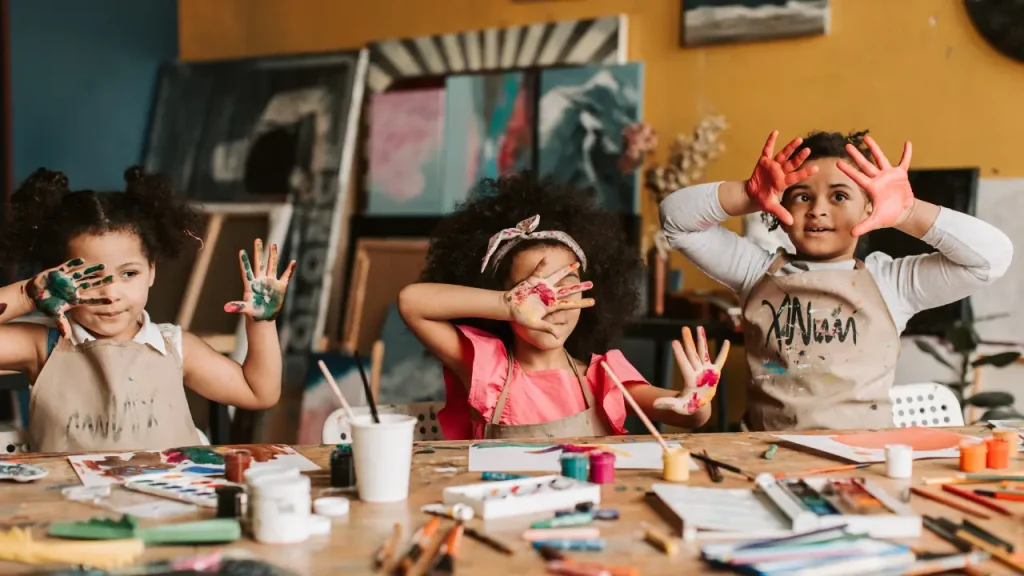
See music and art in action
The fastest way to evaluate a music and art program is to see it during the day. Tours include time in the classrooms during regular activities — you’ll see the difference between programs that talk about enrichment and programs that actually do it. Schedule a tour or call (201) 500-2951.