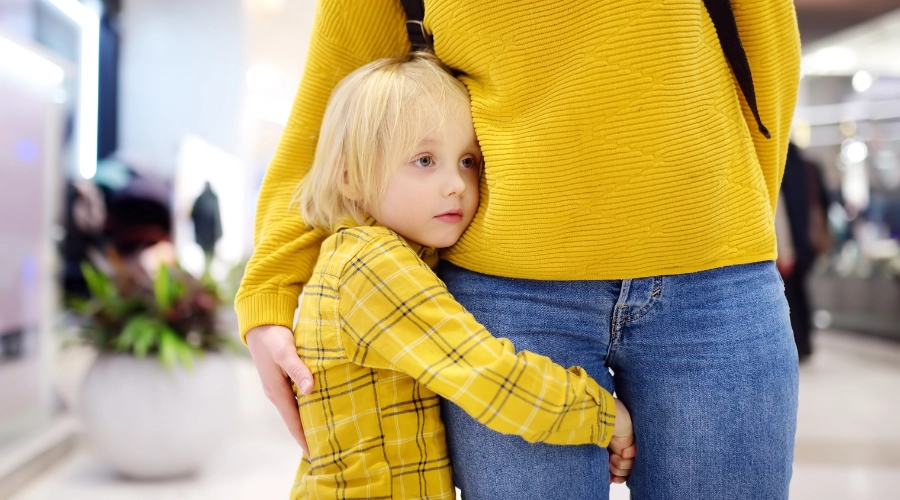
If you’ve watched your child cling to you at daycare drop-off — or felt your own heart break a little while you walked back to your car — you’re experiencing separation anxiety, and it is one of the most universal experiences in early parenting. Separation anxiety at daycare is normal, expected, and almost always temporary. It can also feel awful at the time. We’ve watched thousands of Paramus families through it at JJ Paramus Day Care over the past 30+ years, and the patterns repeat themselves: kids who scream at drop-off are usually playing happily within ten minutes, parents who feel guilty all morning settle by the time they pick up. This guide walks through what’s normal, what helps, what to avoid, and how a quality daycare program supports families through this stage.
What’s normal: separation anxiety by age
Separation anxiety isn’t a problem — it’s a developmental stage. Per Zero to Three, the leading research organization for early childhood development, separation anxiety typically peaks twice in early childhood: once around 8-18 months, and again around 2-3 years old. Older preschoolers can also experience it during transitions like starting a new program or after extended time at home.
Infants (8-18 months)
Babies start to recognize you specifically as their primary caregiver around 6-8 months and develop “object permanence” — the realization that things still exist when they can’t see them. That’s good news cognitively, but it means your baby suddenly understands that you’ve left and may not believe you’re coming back. Crying at drop-off is a sign they’re attached to you. That’s healthy.
Toddlers (2-3 years)
Toddlers have the cognitive ability to anticipate the goodbye, which can make drop-offs harder than the infant phase. They may protest the night before, the morning of, in the parking lot, and at the door. Once they’re inside and engaged, the protest usually stops within minutes.
Preschoolers (3-5 years)
By 3-5, most kids have settled into routine and drop-off is calm. But major life events — a new sibling, a move, an illness, even a long vacation — can briefly bring back separation anxiety. Don’t be alarmed by a regression; it almost always resolves in days, not weeks.
Choosing a daycare when your child has separation anxiety
If your child already struggles with goodbyes, the daycare you pick matters. Tips at home help, and so does a program that’s ready for hard mornings. Looking for daycare for kids with separation anxiety? Here’s what to look for on a tour.
The same caregiver every day
Babies and toddlers settle faster with a familiar face. New Jersey requires centers to assign a primary caregiver to each group of four infants or six toddlers. Ask who that person will be for your child. See how our rooms are set up on our programs by age page.
An open door for parents
Some centers limit visits. At JJ Paramus Day Care, parents are welcome to visit anytime. Knowing you can stop by can make the first weeks easier on you, too.
Updates you can see
A quick photo can calm your worry at your desk. We send a daily report home. We also share photos and videos on a private, parents-only app.
A plan the teacher runs with you
Ask how staff handle a child who cries at drop-off. Listen for a clear routine, not just “they’ll be fine.” Our routine is below.
Want to see the room before the first day? Schedule a tour or call (201) 500-2951.
What actually helps with daycare drop-off anxiety
Keep goodbyes short and predictable
Lingering makes it worse, not better. Develop a short ritual — a hug, a kiss, a wave at the window, then go. Three minutes max. Kids take their cues from you; if you act calm and confident, they read it as “this is fine, I’m safe here.”
Always say goodbye
Sneaking out feels easier in the moment but breaks trust. Your child needs to learn that goodbyes happen and you always come back. Saying “bye, I love you, see you after lunch” — even if it triggers tears — builds that trust over time.
Use a consistent schedule
Drop-off at the same time, pickup at the same time. Kids who know what to expect handle the routine better. Even on slow mornings, try not to deviate from the schedule by more than 15-20 minutes.
Send a comfort item if your daycare allows
A small lovey, a family photo, or a familiar item from home can ease the transition. Check with the program first — some have policies about what stays in cubbies vs. what goes home each day.
Talk about the day before and after
Tell your child what to expect: “After breakfast we’re going to JJ. You’ll see your teacher and your friends. We’ll do art and play outside. Then I’ll pick you up after snack.” After pickup, ask about the day with specific questions: “What song did you sing today?”
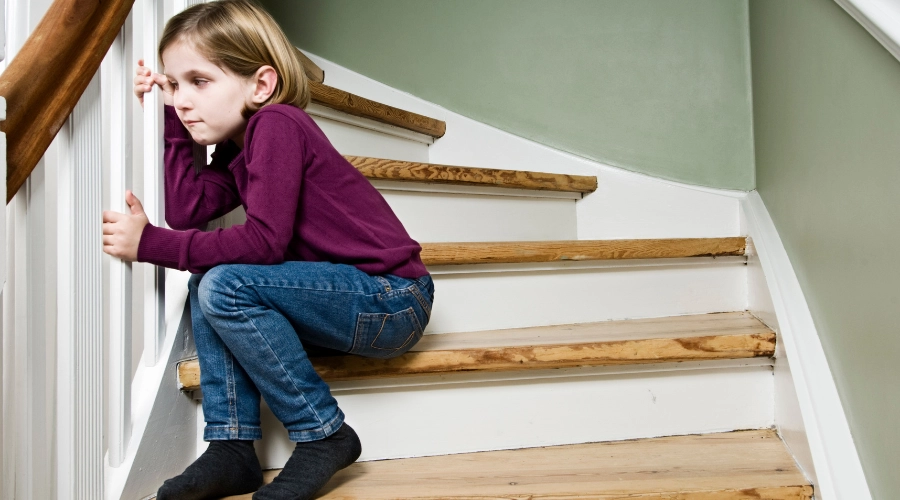
Common mistakes that make separation anxiety worse
- Sneaking out without saying goodbye.
- Drawing out the goodbye for 10-15 minutes hoping the crying will stop.
- Returning multiple times after saying goodbye.
- Visibly crying or showing distress in front of your child.
- Promising things to stop the crying (“if you don’t cry, you can have ice cream after”).
- Asking your child every morning whether they want to go to daycare. Going is the routine; questioning it daily creates uncertainty.
How JJ Paramus Day Care handles drop-off anxiety
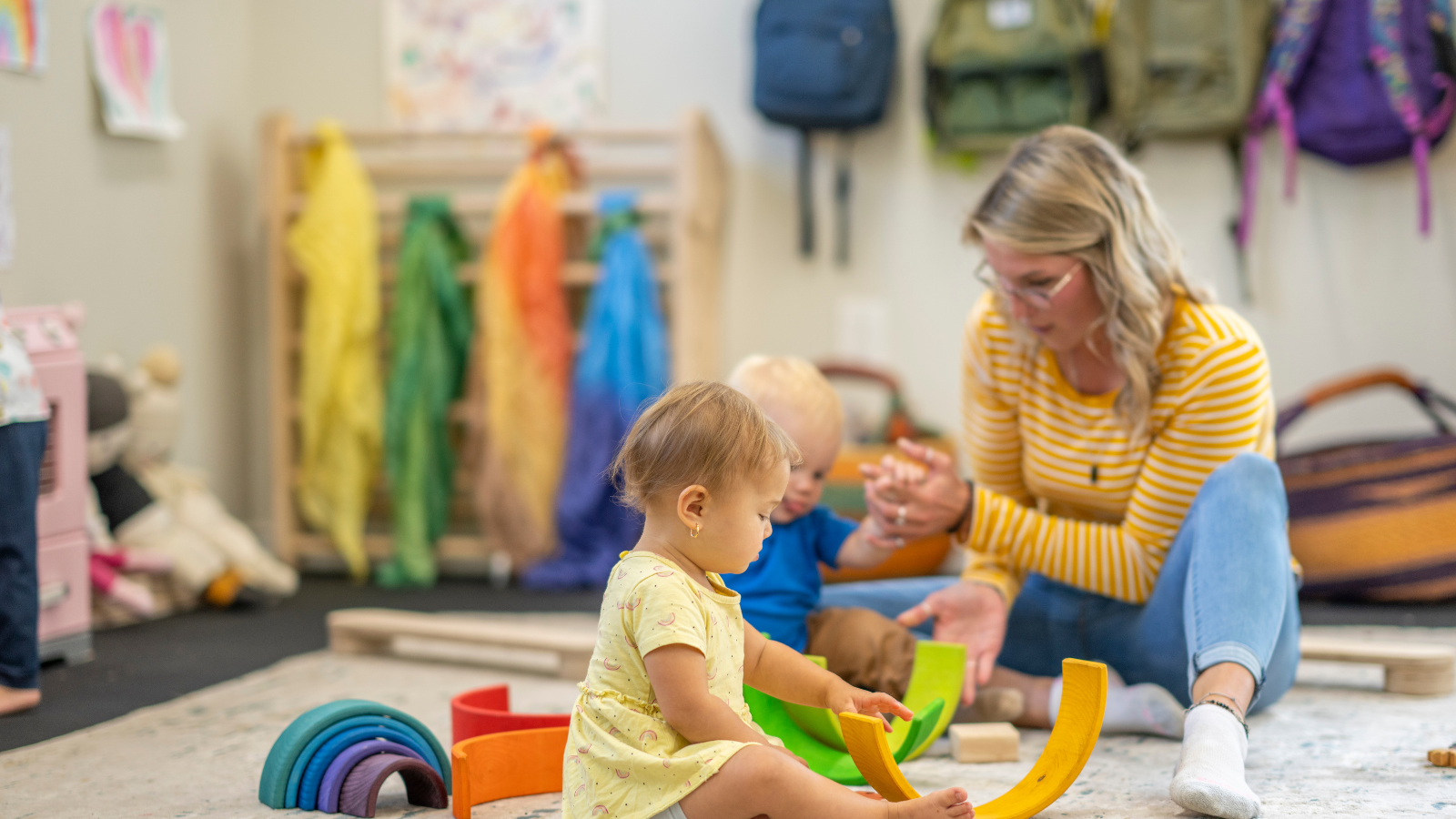
Our staff is trained for this. We expect drop-off tears in the first weeks of any new family — and we’ve watched many a tearful drop-off turn into a smiling kid in less than ten minutes. Here’s what we do:
- A familiar caregiver greets your child at the door. They know your child’s name and what helps.
- We immediately engage your child in a favorite activity — books, toys, the playground, a song. Distraction works.
- We let you know how your child is doing after a hard drop-off, so you know they’ve settled.
- Our staff is fully licensed, background-checked, and CPR and First Aid certified. They understand child development, not just supervision.
If you’re new to a program, see our guide to preparing your child for the first day at daycare — it includes the small things that make a big difference in week one.
When separation anxiety is more than just a phase
Most separation anxiety resolves within 2-4 weeks of starting a new program, and most older kids’ regressions resolve within days. Talk to your pediatrician if:
- Crying continues for more than 30-45 minutes daily after several weeks.
- Your child is unable to engage with caregivers or peers all day, every day.
- Physical symptoms appear (stomachaches, headaches, sleep disruption) and persist.
- Anxiety extends to other settings or non-school situations.
What Parents in Paramus & Bergen County Are Saying
“My son cried for the first three days, and I was heartbroken. But the teachers at Jumpin Jax were so warm and reassuring. By day five, he was running in without looking back.”
— Jessica R., Ridgewood
“It was our daughter’s first time away from family. The team helped us build a drop-off routine that worked—and they sent us updates all morning. We’re so thankful we didn’t give up.”
— Brian K., Hackensack
What You Can Do at Home to Help
You’re part of the success story too. Here are a few simple things parents can do at home to make drop-off smoother over time:
✅ 1. Practice Quick Goodbyes
Keep it short, predictable, and positive. No sneaking out, but no lingering either. Your calm signals safety to your child.
✅ 2. Stick to a Morning Routine
Consistency in wake-up, breakfast, and getting dressed can lower stress before you even leave the house.
✅ 3. Validate Their Feelings (Without Over-Reassuring)
Say things like, “It’s okay to feel sad. You’re safe, and your teacher is here to help you have a great day.”
✅ 4. Build a Goodbye Ritual
High five at the door? Special goodbye song? Little “kiss in the hand”? Find a ritual that’s unique to your family.
✅ 5. Celebrate Progress (Even Tiny Wins)
If your child only cried for five minutes instead of ten, that’s a win. Recognize and praise effort and resilience.
Frequently asked questions
Most kids settle into a new daycare routine within 2-4 weeks. Tougher transitions can take 6-8 weeks. By 6-8 weeks the daily protest is usually gone, even if some Mondays are harder than others.
No. Sneaking out breaks trust and often makes anxiety worse over time. Always say goodbye, keep it short, and leave. Your child learns goodbye is followed by reunion.
No. Separation anxiety is a normal developmental stage and a sign of healthy attachment. It’s not caused by anything you’ve done or haven’t done.
Yes. Our staff let you know how the morning went after a tough drop-off, so you know your child has settled.
Yes. Preschoolers and older kids can experience separation anxiety during transitions — a new program, new sibling, illness, or after a long vacation. Most regressions resolve within days.
Visit the building during a tour, talk about what to expect, develop a goodbye ritual, send a comfort item if allowed, and stay calm at drop-off. Schedule a tour: (201) 500-2951.
Is JJ a good fit for a child with separation anxiety?
For many families, yes. New Jersey requires a primary caregiver for each group of infants or toddlers, so your child sees a familiar face each day. Parents can visit anytime, and you’ll get photos on our private app. Tour first: (201) 500-2951.

Touring JJ before the first day
The single best way to make a smooth start is to visit the program first. Walking through with your child, meeting their future caregivers, and seeing the room helps drop-off go more smoothly on day one. Schedule a tour at JJ Paramus Day Care or call (201) 500-2951.